Berlin Protest Culture and Anti-Authoritarian Dissent
Berlin is not a neutral backdrop for politics. It is a city where international conflicts, anti-war memory, street-level dissent and democratic resistance become visible in public space.
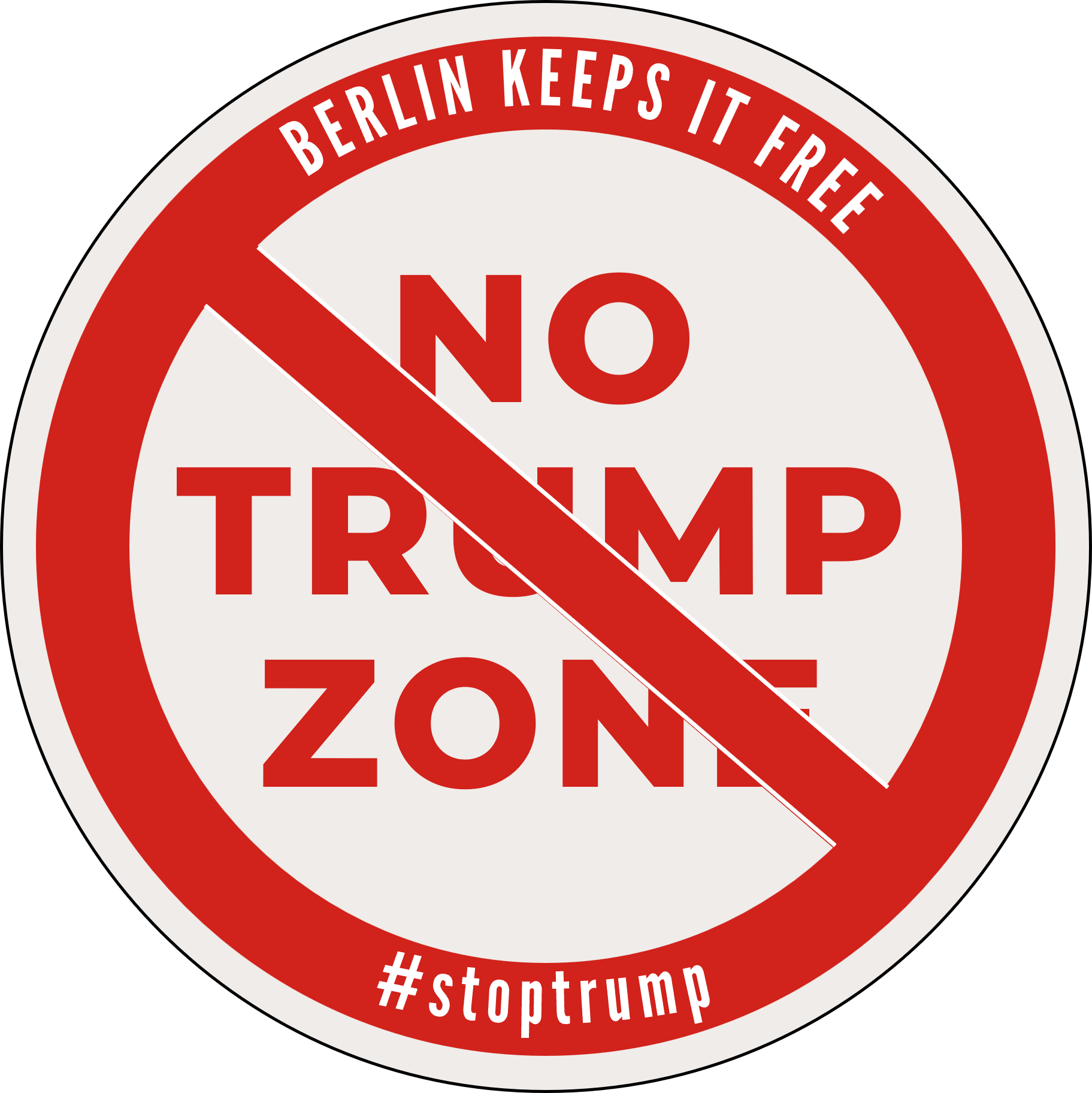
Berlin’s protest culture looks through the lens of anti-authoritarian dissent: criticism of U.S. power politics, resistance to Trumpism, anti-war protest and the city’s long habit of turning political conflict into visible public language.
The point is not hostility toward people because they are American, Israeli, Jewish, Palestinian or from any other background. The focus is power: state violence, militarism, authoritarian spectacle, disinformation and political systems that normalize domination.
Why Berlin?
Berlin carries the visual memory of division, occupation, Cold War politics, squats, student movements, anti-war demonstrations and street-level resistance. Public space in this city has never been only decorative. It is memory, conflict, negotiation and contradiction.
In Berlin, political dissent is not only spoken. It is shown: in marches, banners, wall writing, posters, cultural spaces, counter-demonstrations and everyday visual interruptions. That makes the city a natural place to examine how global politics become visible on the street.
Anti-American protest is not hatred of Americans
Anti-American protest is often misunderstood. In this context, it does not mean hostility toward Americans as people. It means criticism of U.S. power: war politics, imperial influence, surveillance, corporate dominance, militarism and the global reach of American political spectacle.
The target is not a passport. The target is a system of influence: wars justified with moral language, corporate power sold as freedom, surveillance framed as security and political movements that turn cruelty into entertainment.
StopTrumpNow follows this distinction. It rejects Trumpism, authoritarian branding, disinformation and the global normalization of far-right spectacle. It does not reject people because they are American. It rejects politics that make domination look like strength.
Berlin and anti-war memory
Berlin has a long memory of anti-war protest. Demonstrations against the Vietnam War, the Iraq War and later conflicts were never only about distant battlefields. They were also about Germany’s role, Europe’s responsibility and the question of whether democratic societies should follow American power automatically.
That anti-war tradition is part of a broader anti-authoritarian impulse: the refusal to accept official narratives simply because they come from powerful states. Berlin’s protest culture has often insisted that democratic responsibility requires public disagreement.
The visual language of dissent
Berlin’s visual protest language is rarely clean or polished. It is layered, rough, improvised and direct. Posters overlap. Slogans age. Walls become archives. Political messages appear, disappear and return in new forms.
That is part of the city’s force. Berlin protest culture does not ask visual language to be harmless. It asks it to interrupt.
This matters in the age of Trumpism. Trumpist politics are also visual: flags, caps, slogans, television gestures, staged toughness and endless repetition. A visual politics of domination demands a visual politics of refusal.
Berlin is not America’s stage.
The city has absorbed American culture for decades: music, brands, films, platforms, language, consumer aesthetics and political symbols. But influence is not the same as obedience.
Berlin’s protest culture pushes back against imported power narratives. It asks who defines freedom, who profits from crisis, who sells war as protection and who turns political aggression into entertainment.
Trumpism as American spectacle
Trumpism is not only a U.S. domestic issue. It is a global political style. It exports gestures, slogans, enemies and aesthetics: the strongman pose, the attack on truth, the branding of resentment and the promise that cruelty is honesty.
Berlin’s response to that style cannot be passive. A city shaped by propaganda, division and authoritarian violence understands that political aesthetics are never innocent.
StopTrumpNow treats Trumpism as a warning sign: not just a politician, not just a party, but a spectacle of power that must be opposed culturally, visually and publicly.
Israel, Palestine and the difficulty of public protest in Berlin
Berlin’s protest culture is also shaped by the difficult politics of Israel and Palestine. Demonstrations around Gaza, Israeli state policy, antisemitism, racism, occupation, war and German historical responsibility have made public space more contested.
This requires clarity. Criticism of state policy is not automatically antisemitism. At the same time, antisemitism cannot be excused as protest. A democratic protest culture must be able to hold both truths: opposition to state violence and opposition to hatred against Jews, Israelis, Palestinians, Muslims or any other group.
That tension is part of why Berlin matters. The city is not only a stage for protest. It is a test of whether public dissent can remain political, precise and human.
Selected protest moments around U.S. power politics in Berlin
These examples show how criticism of U.S. power politics, Trumpism, militarism, democratic erosion and global influence becomes visible in the city.
A Berlin demonstration against Donald Trump and Elon Musk criticized attacks on democracy, freedom and civil rights. The event connected Berlin to a wider international protest wave against U.S. authoritarian politics.
Read at TagesspiegelSeveral hundred people gathered in Berlin under the “No Kings” banner to protest Donald Trump and his politics. The demonstration tied local dissent to a broader movement against Trump’s authoritarian style of government.
Read at TagesspiegelOn U.S. Independence Day, Americans in Berlin gathered at the Brandenburg Gate to protest Donald Trump. The symbolism matters: criticism of U.S. politics came from Americans themselves rejecting Trump’s political direction.
Read at Berliner ZeitungProtesters gathered in front of the U.S. Embassy in Berlin against a reported U.S. military intervention in Venezuela. The example shifts the focus from Trump as a personality to U.S. foreign policy and interventionism.
Read at amerika21One of the largest Berlin protest events of the last two years. Reporting described tens of thousands of demonstrators calling for an end to the war in Gaza, a halt to German arms exports to Israel and stronger political pressure on the Israeli government.
Read at DeutschlandfunkDemonstrators gathered near the U.S. Embassy in Berlin in April 2026, criticizing U.S. negotiations with Tehran and urging stronger action against the Iranian regime.
Read at Reuters ConnectPublic space as political memory
Public space in Berlin is never just public space. A wall is not just a wall. A square is not just a square. A demonstration is not just a crowd. The city’s streets carry traces of state power, resistance, occupation, ideology, reconstruction and dissent.
This makes political visibility especially meaningful. Protest in Berlin does not only say: “I disagree.” It says: “History has taught us what happens when people stop disagreeing in public.”
FAQ: Berlin protest culture
Is anti-American protest the same as hostility toward Americans?
No. In this context, anti-American protest means criticism of U.S. power politics, militarism, imperial influence and authoritarian political movements. It is not directed against people because of their nationality.
Why does Trumpism matter in Berlin?
Because Trumpism is not only a U.S. phenomenon. Its methods — disinformation, strongman aesthetics, attacks on democratic norms and contempt for truth — influence authoritarian movements far beyond the United States.
Why is Israel/Palestine part of Berlin protest culture?
Because Berlin is a city where global conflicts become visible in public space. Debates around Gaza, Israeli state policy, antisemitism, racism and German historical responsibility shape how protest is understood, policed and contested.
Is this page about products?
No. This page is about political context: Berlin protest culture, anti-authoritarian resistance, criticism of U.S. power politics and the contested role of public space.